
What is your coffee worth? Be honest.
Australians have a habit of devaluing the things they're best at.
World-class coffee, made by skilled hands, from carefully sourced beans, and the conversation is still about whether $5.50 is too much.
It isn't.
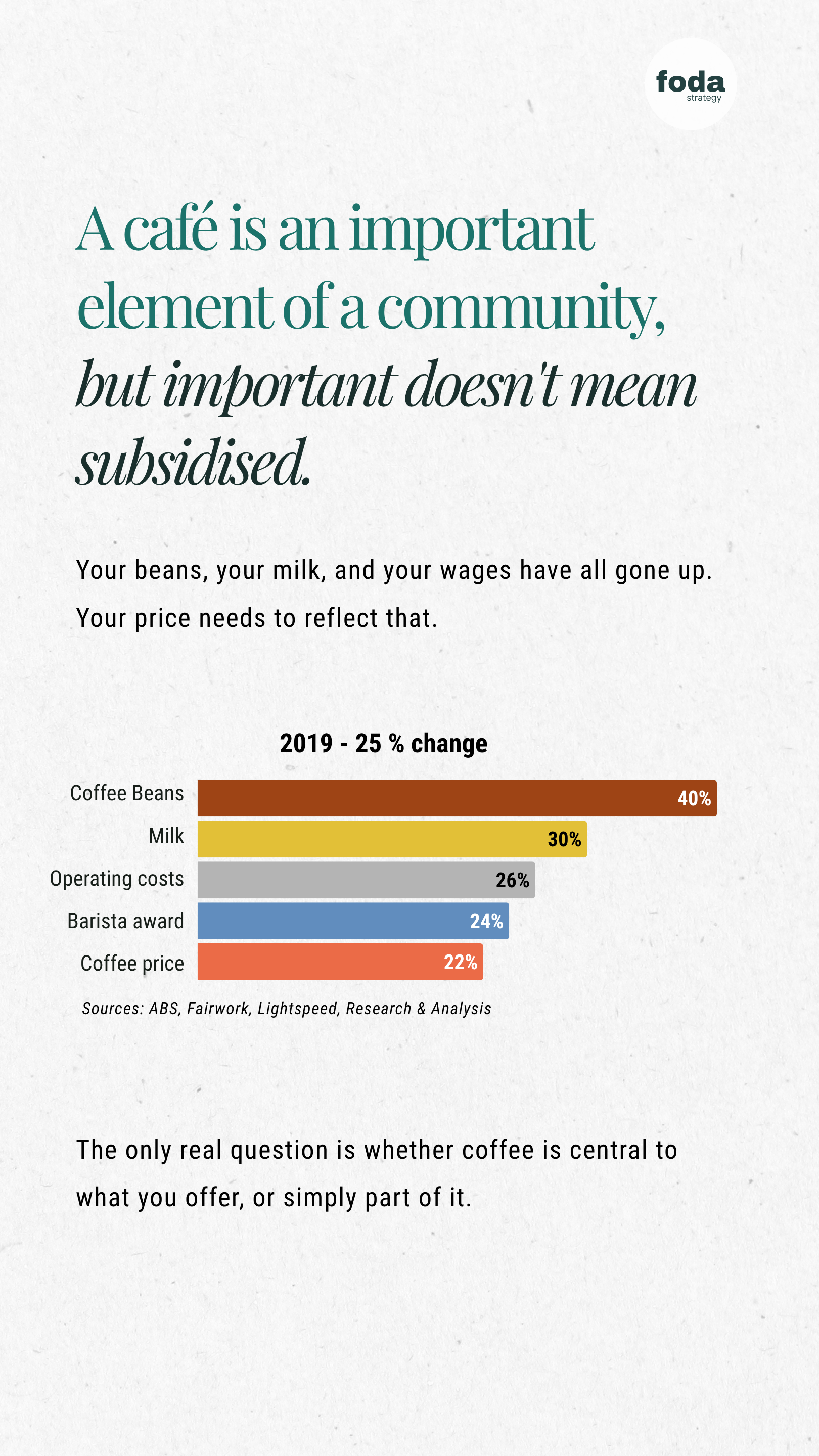
A café is an important element of a community, but important doesn't mean subsidised.
Your beans, your milk, and your wages have all gone up..
Your price needs to reflect that.
The only real question is whether coffee is central to what you offer, or simply part of it.
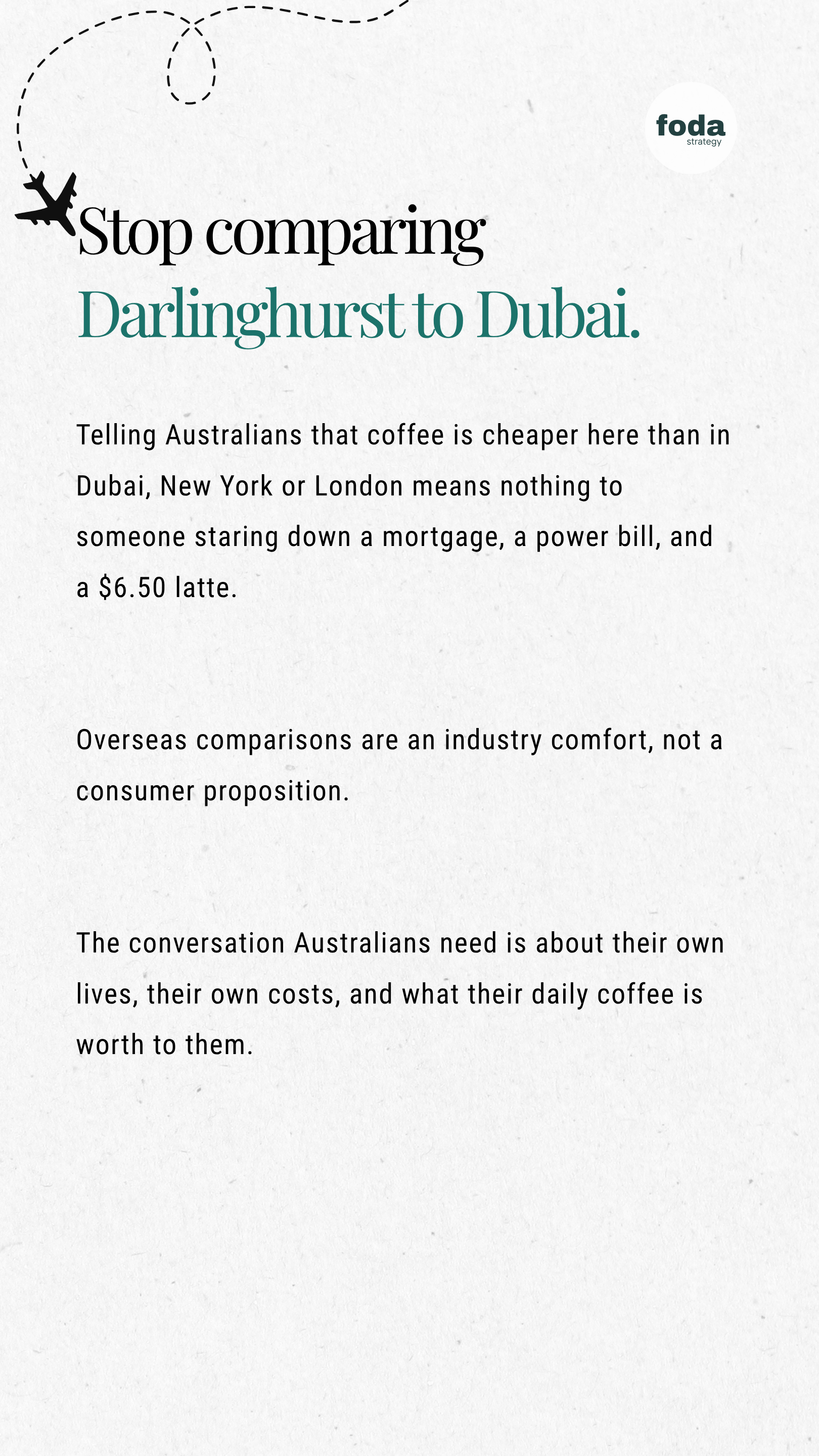
Stop comparing Darlinghurst to Dubai.
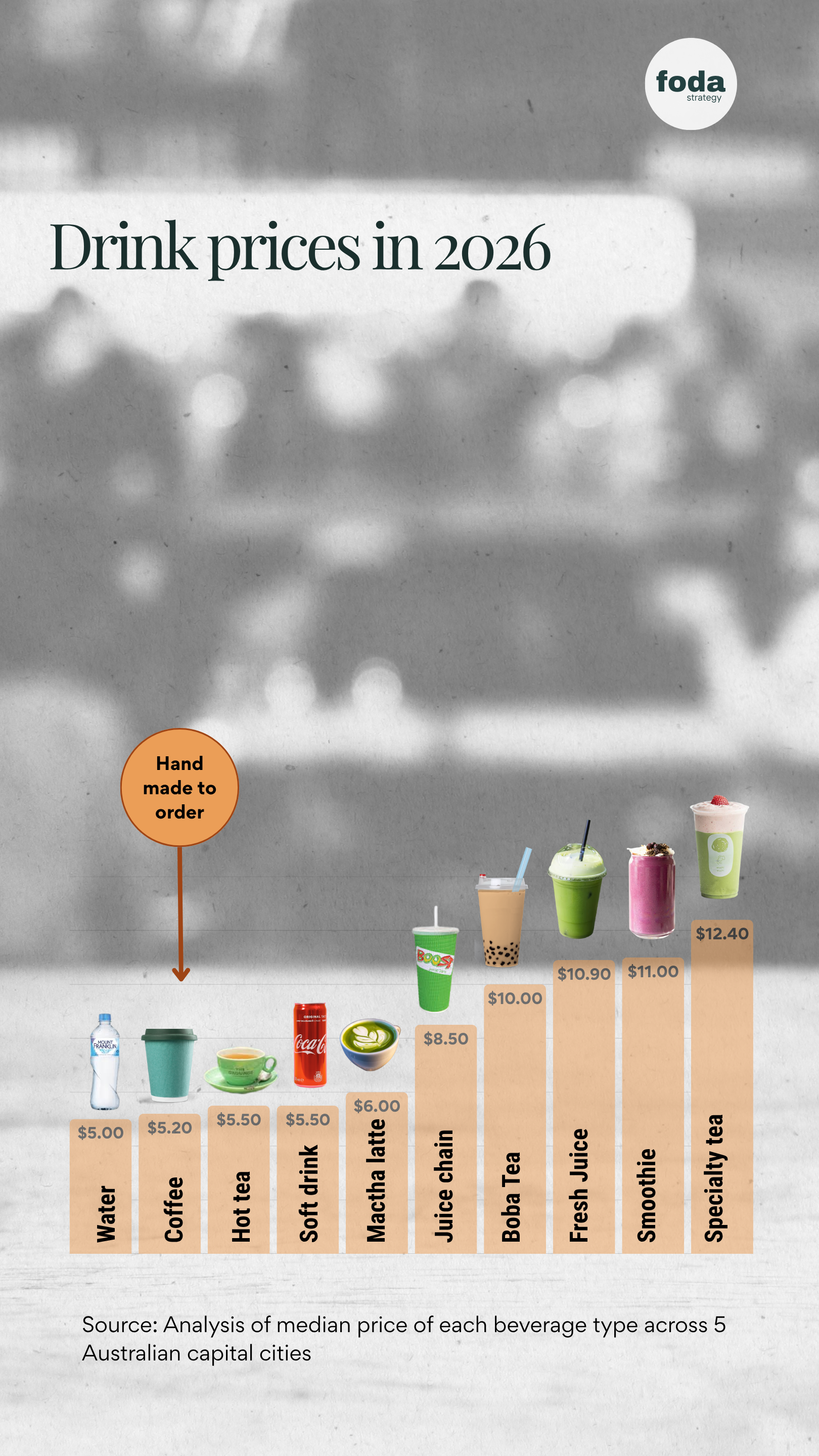
Telling Australians that coffee is cheaper here than in Dubai, New York or London means nothing to someone staring down a mortgage, a power bill, and a $6.50 latte.
Overseas comparisons are an industry comfort, not a consumer proposition.
The conversation Australians need is about their own lives, their own costs, and what their daily coffee is worth to them.
Nobody asks a friend for a catch-up over Fanta.
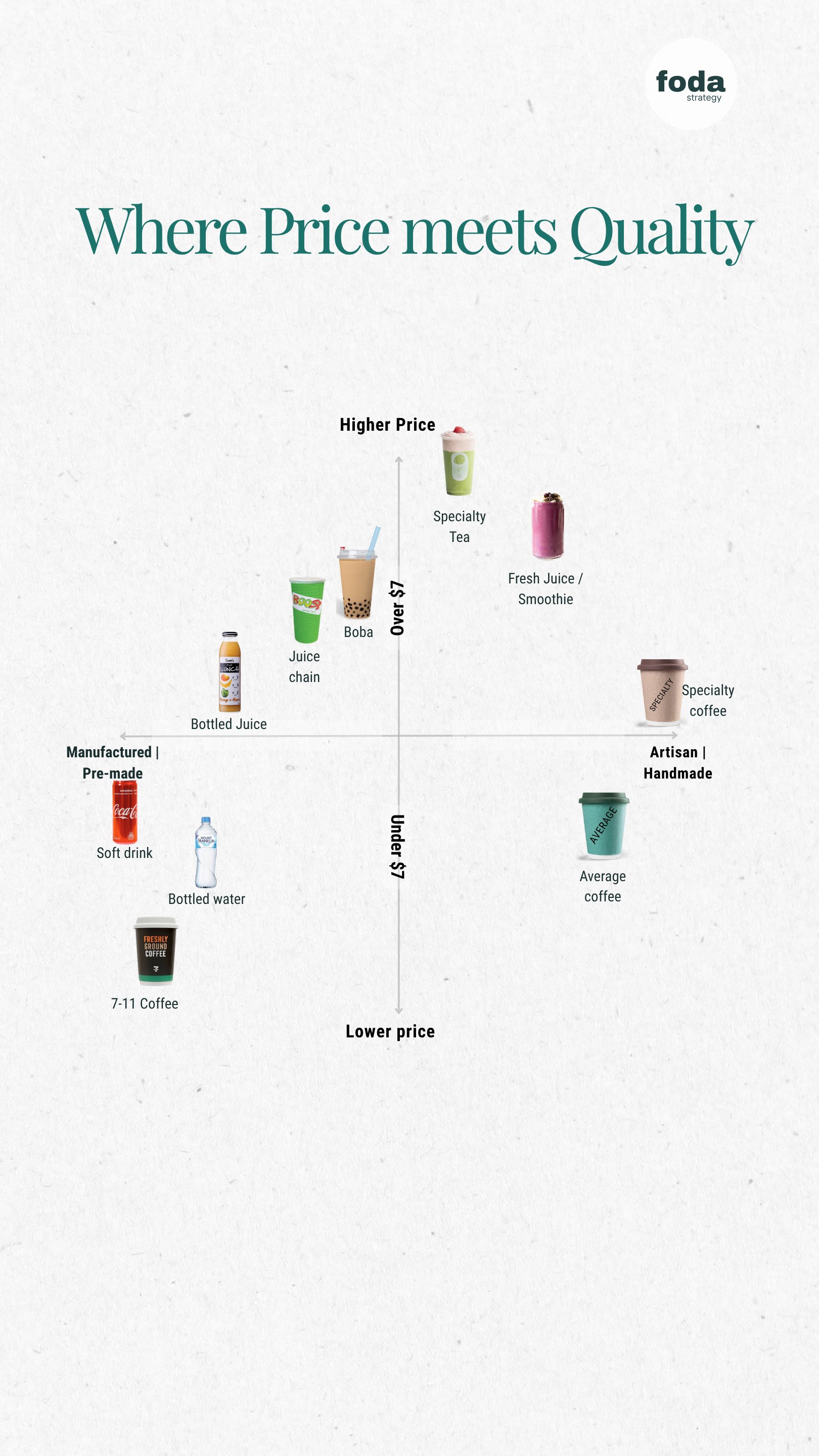
A $2 servo coffee and a delicious $6 flat white are both coffee. Only one of them is a craft.
Unlike other beverages, coffee is not just another product. It’s a ritual, a reason to stop, a small act of connection in an otherwise fast day.
Australians instinctively know this. Stop talking about what coffee costs. Start talking about its value.
Know what coffee means to your business.
Not every café needs to be a coffee destination.
If it's simply a line item, price it accordingly - use it to convert customers, support your broader offer, build loyalty. That's a legitimate strategy.
But if coffee is your craft, charge what it's worth.
Customers don't devalue great coffee out of spite. They do it because nobody has made the case clearly enough. You have the knowledge you need to change that.
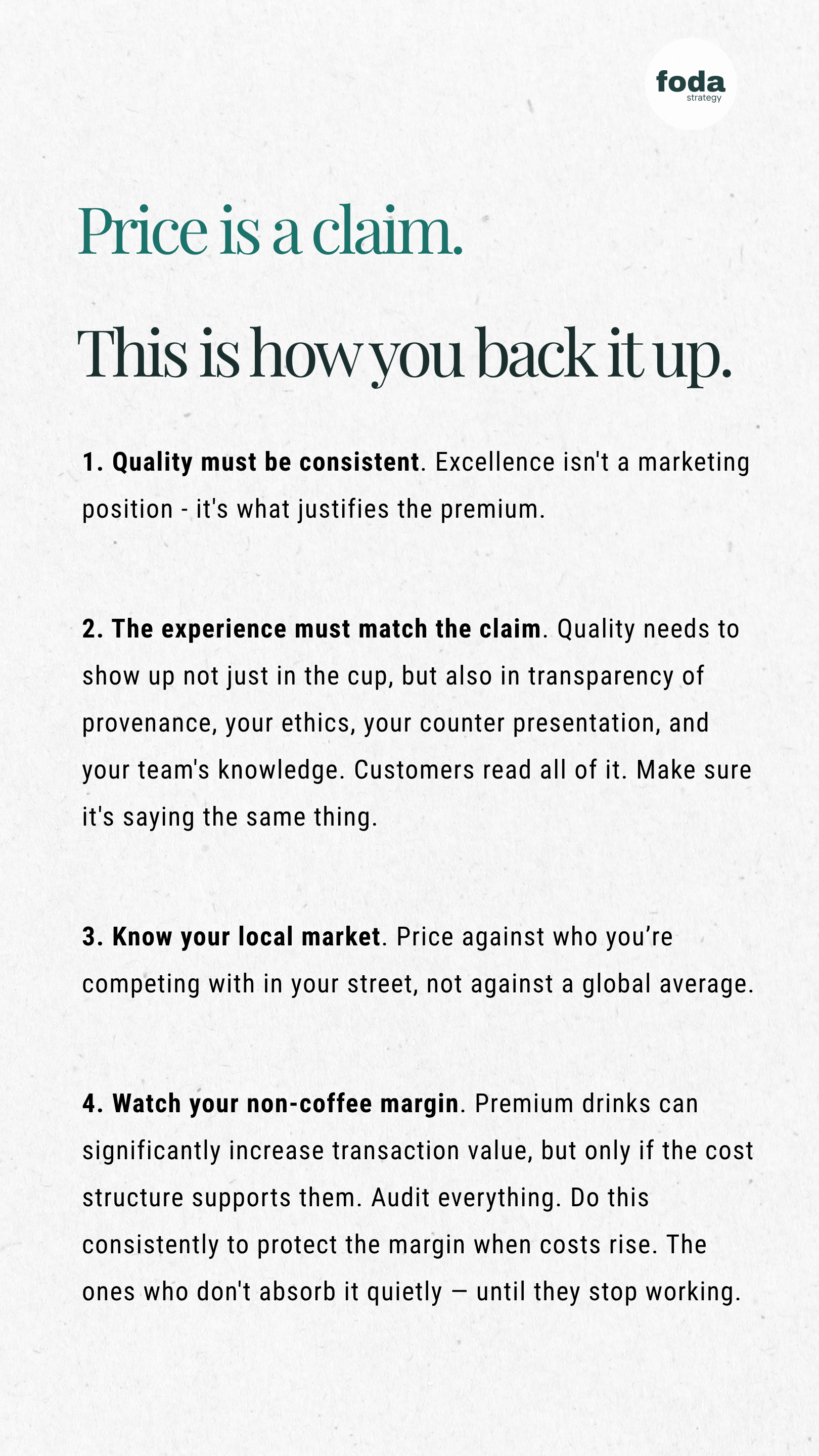
Price is a claim. This is how you back it up.
1. Quality must be consistent.
Excellence isn't a marketing position - it's what justifies the premium.
2. The experience must match the claim.
Quality needs to show up not just in the cup, but also in transparency of provenance, your ethics, your counter presentation, and your team's knowledge. Customers read all of it. Make sure it's saying the same thing.
3. Know your local market.
Price against who you’re competing with in your street, not against a global average.
4. Watch your non-coffee margin.
Premium drinks can significantly increase transaction value, but only if the cost structure supports them. Audit everything. Do this consistently to protect the margin when costs rise. The ones who don't absorb it quietly, until they stop working.
Provenance isn't why you charge more. It's proof that you should.
Sustainability is one quality indicator among several, alongside your barista's skill and your consistency.
Not above them.
Cheap coffee yoesn't cut corners so much as outsource them — to costs that never appear on your invoice.
Sourcing well isn't a sustainability play. It's a quality decision that happens to be sustainable.
Global brands spend millions faking this story because it sells! Your authenticity allows you to tell it honestly.
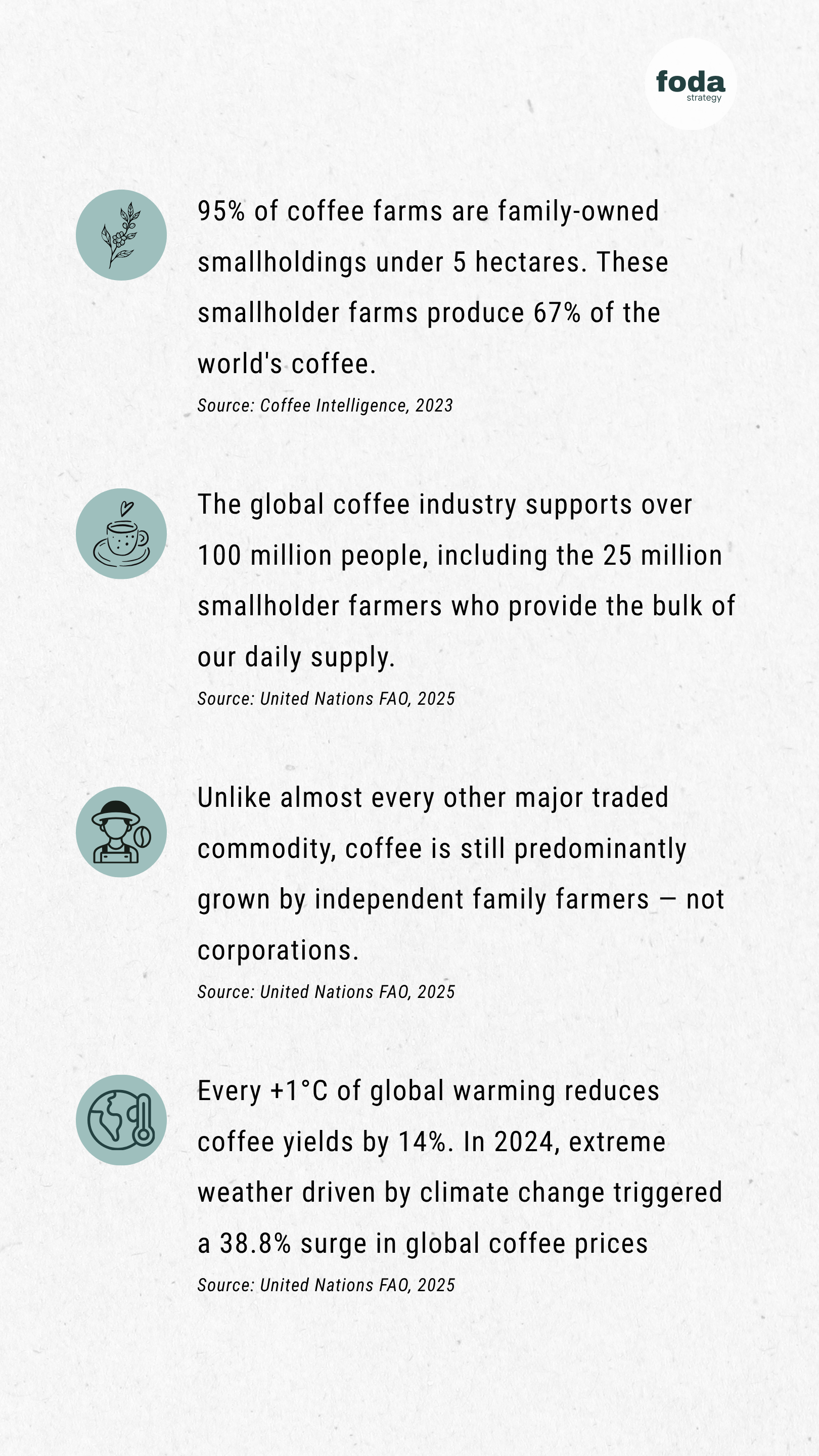
95% of coffee farms are family-owned smallholdings under 5 hectares. These smallholder farms produce 67% of the world's coffee.
Source: Coffee Intelligence, 2023
The global coffee industry supports over 100 million people, including the 25 million smallholder farmers who provide the bulk of our daily supply.
Source: United Nations FAO, 2025
Every +1°C of global warming reduces coffee yields by 14%. In 2024, extreme weather driven by climate change triggered a 38.8% surge in global coffee prices
Source: United Nations FAO, 2025
Whether you're an operator trying to understand your customers or an asset manager evaluating your F&B mix, knowing who you're serving changes everything.
Talk to Foda by calling Charles on 0403 571 901 or email charles@fodastrategy.com